Local search is the largest, most consistent source of revenue for contractors in 2026. The numbers are no longer debatable.
46% of all Google searches carry local intent (LocaliQ, 2026). 80% of local mobile searches convert into a customer action -- a call, a visit, a purchase (SearchEngineWatch). 88% of consumers who search for a local business on their smartphone visit or call within 24 hours (BrightLocal/SeoProfy). 78% of those mobile searches lead directly to a purchase (SearchEngineLand).
Yet 58% of businesses still have no local SEO strategy at all (ReviewTrackers). That gap between opportunity and execution is where six-figure revenue lives.
This playbook organizes the 9 factors that drive local search rankings into a framework called the Local SEO Revenue Stack. It is built on data from Whitespark's 2026 Local Search Ranking Factors study -- the industry's most rigorous annual analysis, aggregating input from 47 experts across 187 ranking factors. Every recommendation here maps directly to measurable ranking weight.
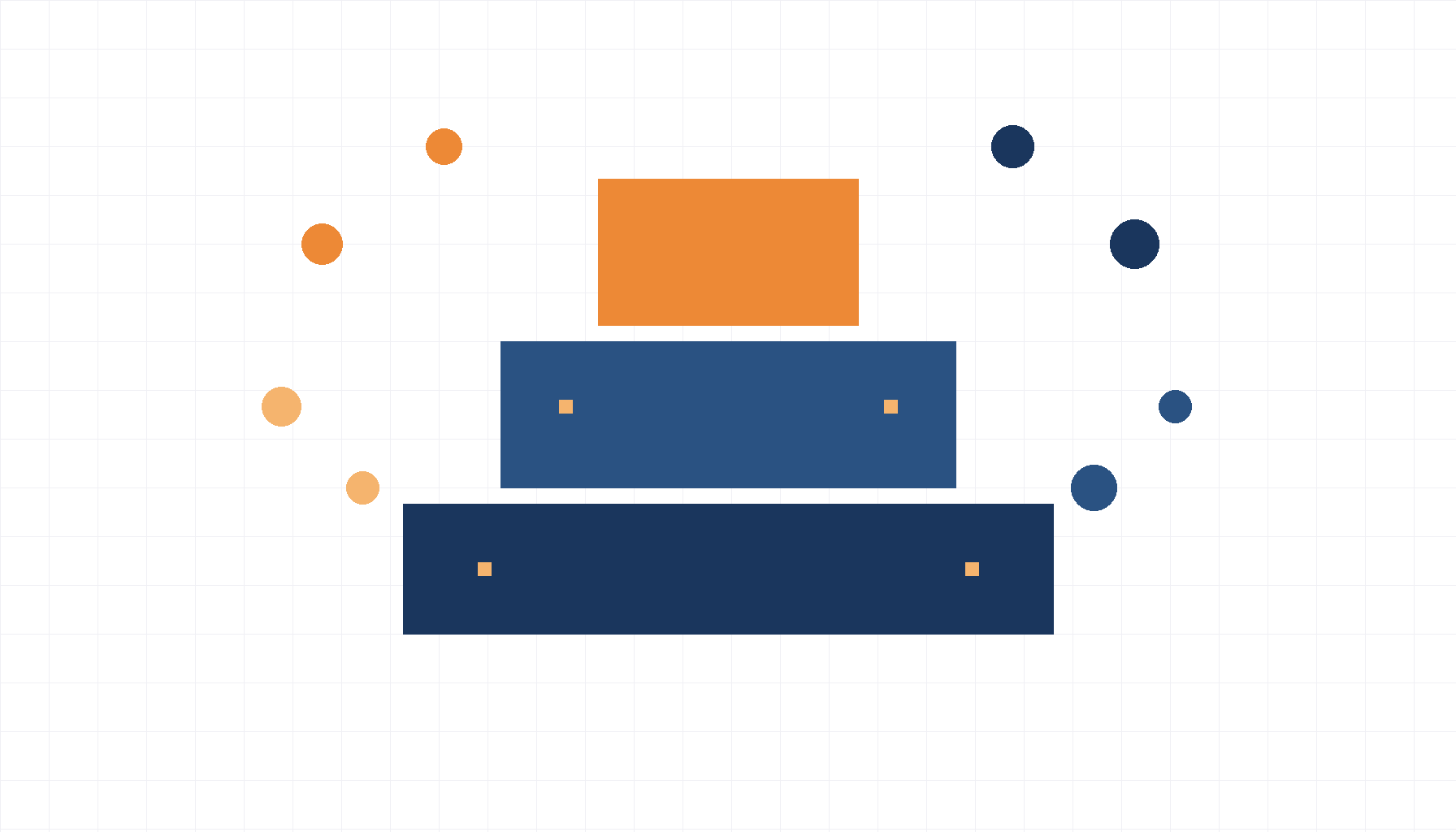
The Local SEO Revenue Stack
Not all ranking factors carry equal weight. Whitespark's 2026 data reveals a clear hierarchy. Organizing your effort around it means spending time where it moves the needle most.
The Local SEO Revenue Stack has three tiers:
Tier 1: Foundation (53% of Local Pack ranking signal) Google Business Profile signals (32%), Citation/NAP signals (6%), and On-Page signals (15%). These three factors alone account for more than half of what determines your Local Pack position. Get these wrong and nothing else matters.
Tier 2: Acceleration (34% of ranking signal) Review signals (20%), Link signals (8%), and Content Depth (6% of behavioral and on-page combined). This tier turns a visible business into a dominant one. It is where most contractors stall -- and where the separation happens.
Tier 3: Compounding (13% of ranking signal) Behavioral signals (9%), Social signals (4%), and the emerging AI visibility layer. These factors compound over time. They are difficult to fake, slow to build, and nearly impossible for competitors to replicate once established.
The math is straightforward: invest 53% of your local SEO effort into Foundation, 34% into Acceleration, and 13% into Compounding. Most contractors do the opposite -- chasing social media and ignoring their Google Business Profile.
Why Local SEO Matters More in 2026
Three converging trends make local SEO the highest-ROI marketing channel for contractors this year.
The Local Pack dominates clicks. 44% of local searchers click on Local Pack results (Red Local Agency, 2025). When the Local Pack appears, the top organic result's click-through rate drops from 39.8% to 23.7% (First Page Sage). The Local Pack's top three positions capture 17.6%, 15.4%, and 15.1% CTR respectively. If you are not in the Pack, you are splitting what remains with every other organic result on the page.
Mobile is the battlefield. 84% of local searches happen on mobile devices (RedLocalSEO). 99% of consumers used the internet to look up local business information in the past year (BrightLocal). The searcher is standing in their kitchen with a leaking pipe, or staring at a broken HVAC unit in July. They search, they find, they call. The cycle is minutes, not days.
AI is reshaping discovery. 40.16% of local business queries now trigger AI Overviews in Google search results (SeoProfy). This is a new ranking surface with its own signal weights. Contractors who optimize only for traditional search are already losing visibility to those who understand AI search factors.
The ROI is proven. 40% of local SEO campaigns achieve 500% or greater return on investment. 94% of top-performing brands maintain a dedicated local marketing strategy (BrightLocal). Home services businesses see an industry-wide conversion rate of 7.8%, with plumbing and water treatment companies reaching 12-16% (WebFX, 2026). No other marketing channel delivers this combination of intent, proximity, and conversion efficiency.
Tier 1: Foundation -- The 53%
Factor 1: Google Business Profile Signals (32%)
GBP signals are the single largest ranking factor for Local Pack placement. This is not an opinion. Whitespark's data shows GBP signals at 32% -- nearly double the next highest factor.
The critical GBP optimizations:
- Primary category accuracy. Your primary business category must match your core service exactly. "Plumber" and "Plumbing Service" are different categories with different ranking implications. Use the most specific category available.
- Complete attribute coverage. Fill every available attribute. Service areas, business hours, appointment links, service menu, Q&A section. Google rewards completeness.
- Google Business Profile posts. Weekly posts signal an active, engaged business. Each post is an opportunity to include keywords naturally and drive engagement signals.
- Photo volume and recency. Businesses with 100+ photos receive 520% more calls than average (BrightLocal). Upload project photos weekly -- before and after shots, team photos, completed work.
- Products and services section. List every service with descriptions. This section feeds directly into the queries Google matches to your profile.
Factor 2: Citation and NAP Signals (6%)
NAP stands for Name, Address, Phone Number. Citation signals measure the consistency and breadth of your business information across the internet.
6% sounds small until you realize that inconsistent NAP data actively damages your other signals. A wrong phone number on Yelp undermines the trust Google places in your GBP data.
Priority citation sources for contractors: - Google Business Profile (primary) - Bing Places - Apple Maps - Yelp - Angi (formerly Angie's List) - HomeAdvisor - BBB (Better Business Bureau) - Industry-specific directories (state licensing boards, trade associations)
The rule: Identical NAP data everywhere. Not similar. Identical. "123 Main Street" and "123 Main St." are inconsistencies in Google's eyes. Choose one format and enforce it across every listing.
Factor 3: On-Page Signals (15%)
On-page signals account for 15% of Local Pack ranking and a dominant 33% of local organic ranking. This factor carries even more weight for organic results than GBP signals carry for the Local Pack.
For contractors, on-page optimization means:
- Location-specific service pages. A dedicated page for each service in each area you serve. "Emergency Plumbing Repair in [City]" with unique content, not duplicated templates with swapped city names.
- Schema markup. LocalBusiness schema, Service schema, and Review schema. Structured data is no longer optional -- it is table stakes for both traditional and AI search visibility.
- Title tag and meta description optimization. Include your primary service, location, and a conversion-driving value proposition. Every page needs a unique title tag.
- Mobile-first page speed. Core Web Vitals compliance is a ranking factor. Pages that load in under 2.5 seconds (LCP) and maintain visual stability (CLS under 0.1) outperform slower competitors.
- Internal linking architecture. Service pages link to related services. Location pages link to the corresponding service pages. A clear hierarchy helps Google understand your service area and expertise.
Tier 2: Acceleration -- The 34%
Factor 4: Review Signals (20%)
Reviews are the second most important Local Pack factor at 20%. They also carry significant weight in AI search visibility at 16% (Whitespark, 2026).
The signals that matter most within reviews:
- Review velocity. The rate of new reviews matters more than total count. A business gaining 5 reviews per week outranks one with 500 reviews but no new ones in three months.
- Review recency. Whitespark identifies review recency as a top-5 ranking factor. Reviews older than 90 days carry diminishing weight.
- Review content. Reviews that mention specific services and locations ("They fixed our furnace in [City] the same day we called") carry more ranking weight than generic five-star ratings.
- Review response rate. Responding to every review -- positive and negative -- signals engagement. Google measures this.
- Review diversity. Reviews across multiple platforms (Google, Yelp, Facebook, industry sites) create a broader trust signal than reviews concentrated on a single platform.
Target: A minimum of 4 new Google reviews per week for active contractors. Establish a systematic post-service review request process. Text-based requests within 2 hours of job completion see the highest response rates.
Factor 5: Link Signals (8%)
Backlinks account for 8% of Local Pack ranking and 24% of local organic ranking. For organic results, links are the second most important factor behind on-page signals.
Contractor-specific link building opportunities:
- Local sponsorships. Youth sports teams, community events, local charities. Each sponsorship typically includes a website link on the organization's site.
- Supplier and manufacturer relationships. If you are a certified installer for a manufacturer, request a listing on their dealer/installer locator page.
- Local business associations. Chamber of Commerce memberships, trade associations, BNI groups. These provide authoritative local backlinks.
- Local media coverage. Newsworthy projects, community involvement, and expert commentary for local news outlets generate high-authority links.
- Guest content on industry sites. Contributing expertise to home improvement blogs, real estate sites, and property management publications.
Quality over quantity. One link from your city's Chamber of Commerce website outweighs fifty links from random directories. Focus on locally relevant, topically aligned sources.
Factor 6: Content Depth
Content depth is not a standalone Whitespark factor -- it operates through on-page and behavioral signals. But it deserves separate attention because it is the bridge between Tier 1 and Tier 2.
Shallow content -- a 200-word service page with stock photos -- cannot rank for competitive local queries. Google's helpful content system evaluates whether your content demonstrates real expertise.
What content depth looks like for contractors:
- Service pages with 800-1,200 words covering the process, timeline, pricing factors, and common questions
- Project galleries with detailed descriptions of the work performed, challenges solved, and materials used
- Educational content addressing the questions homeowners actually ask before hiring ("How much does a bathroom remodel cost in [City]?")
- Location-specific content that references genuine local details -- not templated pages with swapped city names
Tier 3: Compounding -- The 13%
Factor 7: Behavioral Signals (9%)
Behavioral signals measure how users interact with your search presence. Click-through rate, time on site, bounce rate, driving direction requests, click-to-call actions. These account for 9% of Local Pack ranking.
You cannot directly manipulate behavioral signals. They are the output of everything else you do. A well-optimized GBP with compelling photos gets more clicks. A fast, informative website reduces bounce rates. Good reviews increase click-through rates.
The compounding effect: Better Foundation and Acceleration performance generates stronger behavioral signals, which further improve your ranking, which generates more traffic, which produces more behavioral data. This is why established local SEO compounds -- and why competitors find it increasingly difficult to displace you.
Factor 8: AI Search Visibility
This is the newest factor in the local SEO landscape. 40.16% of local business queries now trigger AI Overviews (SeoProfy), and the signal weights differ significantly from traditional local search.
Whitespark's 2026 AI Search Visibility breakdown:
| Factor | Weight | |---|---| | On-Page Signals | 24% | | Review Signals | 16% | | Citation Signals | 13% | | Link Signals | 13% | | GBP Signals | 12% | | Personalization | 9% | | Social Signals | 9% | | Behavioral Signals | 4% |
Notice the rebalancing. On-page signals dominate at 24%. Citations carry more than double the weight they hold in traditional Local Pack ranking (13% vs. 6%). Social signals triple in importance (9% vs. 4%). GBP signals, while still significant at 12%, are no longer the dominant factor they are in the Local Pack (32%).
What this means for contractors: AI visibility requires broader optimization. A business that ranks well in the Local Pack because of a strong GBP profile may not appear in AI Overviews if its on-page content, citation consistency, and social presence are weak. The businesses that will dominate in 2026 and beyond are those optimizing across all three tiers.
Factor 9: Social Proof and Signals (4%)
Social signals account for 4% of Local Pack ranking, 5% of local organic, and a significant 9% of AI search visibility. Social proof is the compounding layer that reinforces every other signal.
For contractors, effective social proof includes:
- Active Google Business Profile posting (weekly project updates)
- Facebook business page with consistent posting and customer engagement
- Before-and-after project galleries shared across social platforms
- Video content showing work in progress or completed projects
- Community involvement documented and shared publicly
Social signals do not move the needle on their own. They compound the effects of reviews, content, and GBP activity. A contractor with strong social presence and strong reviews will outperform one with identical reviews but no social activity.
Revenue Impact Calculator
Abstract ranking factors become concrete when you attach revenue numbers. Here is the math for a mid-market contractor.
Assumptions: - Service area population: 150,000 - Monthly local searches for primary services: 2,400 - Average job value: $4,500 - Close rate on inbound leads: 35%
Current state (no local SEO strategy):
| Metric | Value | |---|---| | Monthly searches | 2,400 | | Visibility (not in Local Pack) | 2% CTR | | Monthly clicks | 48 | | Website conversion rate | 3% | | Monthly leads | 1.4 | | Close rate | 35% | | Monthly jobs from search | 0.5 | | Monthly revenue from search | $2,250 | | Annual revenue from search | $27,000 |
After 6 months of Local SEO Revenue Stack implementation:
| Metric | Value | |---|---| | Monthly searches | 2,400 | | Visibility (Local Pack position 2) | 15.4% CTR | | Monthly clicks | 370 | | Website conversion rate | 7.8% (industry avg) | | Monthly leads | 28.8 | | Close rate | 35% | | Monthly jobs from search | 10.1 | | Monthly revenue from search | $45,450 | | Annual revenue from search | $545,400 |
Revenue difference: $518,400 per year. Even if you achieve half these numbers, you are looking at a quarter-million-dollar annual revenue increase from a channel that costs a fraction of paid advertising. This is why 40% of local SEO campaigns achieve 500%+ ROI.
The numbers are not theoretical. Home services businesses converting at 7.8% industry-wide, with plumbing and water treatment companies reaching 12-16% (WebFX, 2026), regularly achieve these ranges when local visibility moves from invisible to Local Pack placement.
The 30-Minute Weekly Local SEO Routine
Consistency beats intensity. This weekly routine maintains and improves your Local SEO Revenue Stack across all three tiers.
Monday: Foundation Maintenance (10 minutes) - Publish one Google Business Profile post (project photo + service description + location) - Upload 3-5 new project photos to your GBP - Check and respond to any new GBP questions - Verify business hours and contact information are current
Wednesday: Acceleration Work (10 minutes) - Respond to every new review (Google, Yelp, Facebook) since last check - Send review request texts/emails to customers from jobs completed this week - Identify one local link opportunity (event sponsorship, association listing, supplier page) - Review analytics for top-performing service pages and note content gaps
Friday: Compounding Activity (10 minutes) - Share one project update or before-and-after on Facebook and social platforms - Check NAP consistency on one citation source (rotate through your list weekly) - Review one competitor's GBP for new ideas or gaps you can exploit - Update one service page with additional detail, a new FAQ, or a recent project example
This routine is designed to be sustainable. Thirty minutes per week, every week, for twelve months will move the needle more than a 40-hour burst followed by six months of neglect. Local SEO rewards consistency. The compounding effect of weekly activity across all three tiers creates a ranking advantage that accelerates over time.
Ranking Factor Comparison: Three Search Surfaces
The same 9 factors carry different weights depending on which search surface you are optimizing for. This table provides the complete Whitespark 2026 data for all three:
| Ranking Factor | Local Pack/Maps | Local Organic | AI Search | |---|---|---|---| | GBP Signals | 32% | 7% | 12% | | On-Page Signals | 15% | 33% | 24% | | Review Signals | 20% | 6% | 16% | | Link Signals | 8% | 24% | 13% | | Citation Signals | 6% | 7% | 13% | | Behavioral Signals | 9% | 10% | 4% | | Personalization | 6% | 8% | 9% | | Social Signals | 4% | 5% | 9% |
The distribution reveals a critical insight: there is no single optimization that wins across all three surfaces. GBP dominates the Local Pack but is a minor factor in organic. Links dominate organic but are moderate in AI search. On-page signals are the most consistently weighted factor across all three surfaces.
The takeaway: Contractors who optimize only for the Local Pack are leaving organic and AI visibility on the table. The Local SEO Revenue Stack approach -- building Foundation, then Acceleration, then Compounding -- creates balanced strength across all three search surfaces.
What Happens Next
Local SEO for contractors in 2026 is not complicated. It is demanding. It requires consistent execution across 9 ranking factors, organized into three tiers, maintained weekly for months before the compounding effect fully kicks in.
The contractors who do this work will capture a disproportionate share of the $518 billion home services market. The ones who do not will continue wondering why the phone does not ring despite having a website and a few dozen reviews.
The Local SEO Revenue Stack is not a silver bullet. It is a system. Foundation first, Acceleration second, Compounding third. Thirty minutes per week. Every week.
Start with your Google Business Profile. It is 32% of your Local Pack ranking. If you do nothing else from this playbook, do that. Then build from there.