When a homeowner asks ChatGPT "who's the best plumber in Dallas?" they get a map, a list, and a recommendation. Not ten blue links. A direct answer.
Your business is either on that list or it does not exist in the conversation.
This is not a future problem. ChatGPT processes over 3 billion prompts per month (Digital Bloom AI Visibility Report, 2025). Google AI Overviews now appear in over 50% of searches — up from 6.5% in early 2024 (Ahrefs/Stan Ventures, 2025). Perplexity indexes 200+ billion URLs and growing.
The question is no longer whether AI search matters. The question is: how do these systems decide which businesses to name?
We reverse-engineered the answer.

The Three AI Search Engines That Matter Right Now
Each major AI platform pulls from different data sources, weights different signals, and recommends businesses using different logic. Optimizing for one does not automatically optimize for all three.
Here is what the research shows for each.
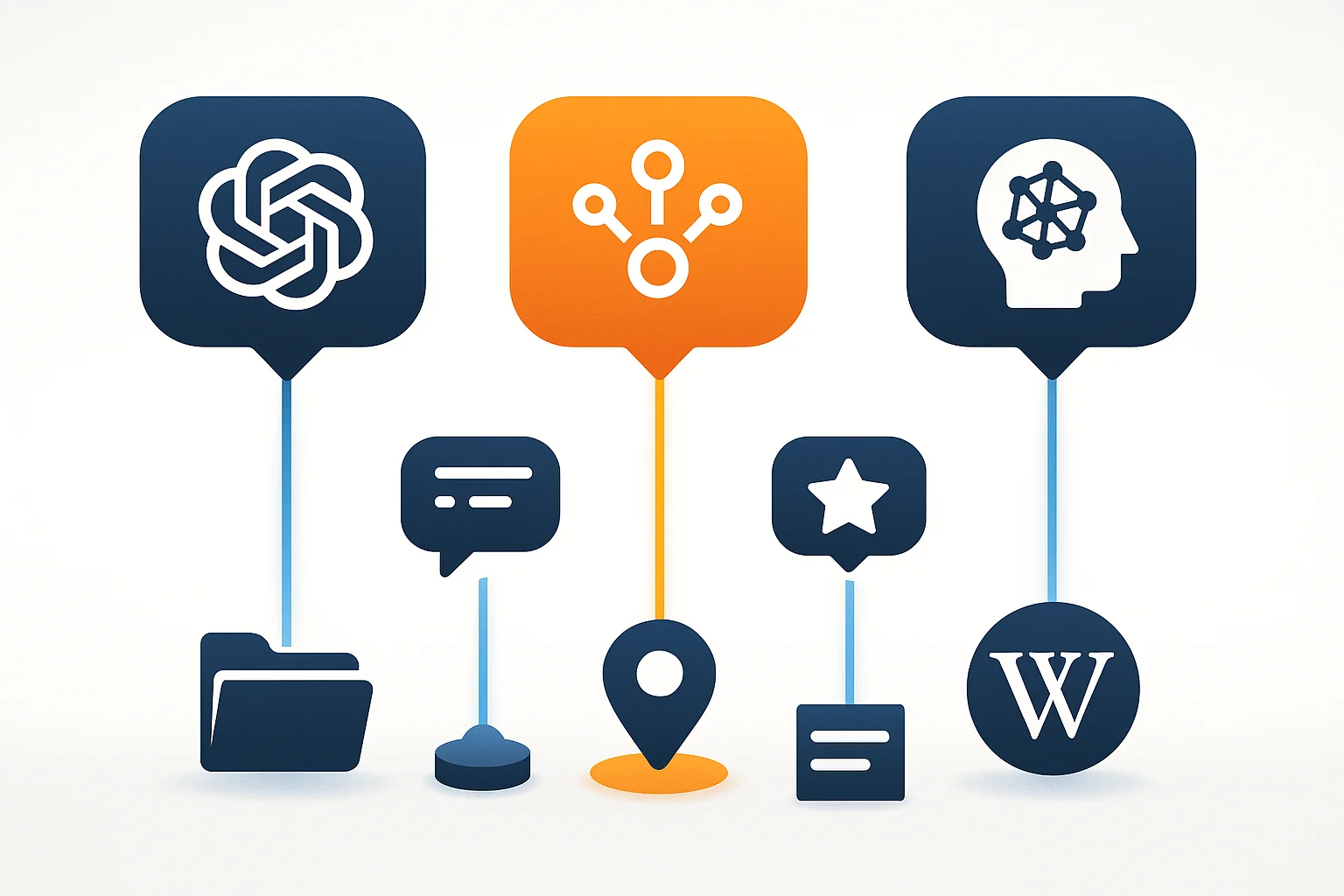
ChatGPT: Foursquare Is the Hidden Kingmaker
This surprises most business owners: 60-70% of local business results shown in ChatGPT come directly from Foursquare (Yaggoseo/Natzir Turrado research, confirmed by BrightLocal October 2025 and GMBapi August 2025).
Not Google Maps. Not Yelp. Foursquare.
When you ask ChatGPT for a local recommendation, it triggers an internal tool call that queries Foursquare's API. Mapbox generates the map. A startup called Reprompt enriches outdated Foursquare listings with fresh data scraped from across the web.
What ChatGPT actually evaluates:
- Foursquare listing completeness — name, category, address, photos, ratings
- Cross-platform consistency — Reprompt cross-references your website, social profiles, and third-party directories
- Category precision — "HVAC Contractor" ranks differently than "Home Services." Specific categories win.
- Training data mentions — for non-local queries, ChatGPT draws from parametric knowledge. Brands mentioned frequently across Wikipedia, licensed publishers (Conde Nast, Vox Media), and Reddit with 3+ upvotes develop stronger neural representations (Digital Bloom, 2025).
The critical gap: Foursquare shut down its consumer-facing city guide in 2025. Many listings are now outdated — wrong hours, old photos, incorrect phone numbers. If your Foursquare listing is stale or missing, ChatGPT may not know you exist, even if you rank #1 on Google.
When ChatGPT uses web browsing mode, 87% of its citations match Bing's top 10 organic results — with only 56% correlation with Google results (Seer Interactive, 2025). If you have been ignoring Bing SEO, you have been ignoring ChatGPT.
Google AI Overviews: Semantic Completeness Wins
Google's AI Overviews operate on fundamentally different logic than traditional search rankings. An analysis of 15,847 AI Overview results across 63 industries found that semantic completeness is the #1 ranking factor with a 0.87 correlation (AI Mode Boost, 2025).
What does semantic completeness mean? Your content must provide a complete, self-contained answer in 134-167 words that requires no external context. AI Overviews extract these "semantic units" and present them directly.
The key signals Google AI Overviews weight:
| Signal | Correlation | Impact | |---|---|---| | Semantic completeness | r=0.87 | Content scoring 8.5/10+ is 4.2x more likely to be cited | | Multi-modal content (text + images + structured data) | r=0.92 | 156% higher selection rate | | Real-time factual verification | r=0.89 | 89% higher selection for content with authoritative citations | | E-E-A-T signals | r=0.81 | 96% of cited content comes from verified authoritative sources | | Structured data (schema markup) | — | 73% higher selection rate | | Domain Authority | r=0.18 | Declining rapidly — down from 0.23 in 2024 |
The paradigm shift: 47% of AI Overview citations now come from pages ranking below position #5 (AI Mode Boost, 2025). Traditional rankings matter less. Content quality and structure matter more.
Google AI Overviews average 10.2 links from 4 unique domains per response (Wellows, 2026). That means only 4 businesses get cited per query. Not 10. Four.
Perplexity: Reddit and Community Content Dominate
Perplexity is architecturally different from ChatGPT and Google. Every single query triggers a real-time web search against 200+ billion indexed URLs. Nothing comes from training data alone.
Perplexity's top citation sources (Digital Bloom, 2025):
| Source | % of Top 10 Citations | |---|---| | Reddit | 46.7% | | YouTube | 13.9% | | Gartner | 7.0% | | Other | 32.4% |
Reddit dominates nearly half of Perplexity's citations. When someone asks Perplexity "best HVAC company in Houston," it searches Reddit threads, local subreddits, and community discussions for real recommendations.
What this means for local businesses: If nobody is talking about you on Reddit, you are invisible to Perplexity. Period. The businesses that show up are the ones with genuine community mentions — not self-promotion, but real people recommending them.
Why Each Platform Picks Different Winners
Only 11% of domains are cited by both ChatGPT and Perplexity (Digital Bloom, 2025). The overlap is shockingly low.
A plumbing company could be: - Invisible on ChatGPT (no Foursquare listing) - Cited in Google AI Overviews (strong website with schema markup) - Recommended on Perplexity (active Reddit mentions)
Or the reverse. Each platform has blind spots. The businesses that win are the ones visible across all three.
Brand search volume — not backlinks — is the #1 predictor of LLM citations with a 0.334 correlation (Digital Bloom, 2025). That means the businesses people actively search for by name get recommended more often. It is a compounding flywheel: more brand awareness leads to more AI citations leads to more brand awareness.
The AI Citation Blueprint: 8 Steps to Get Recommended
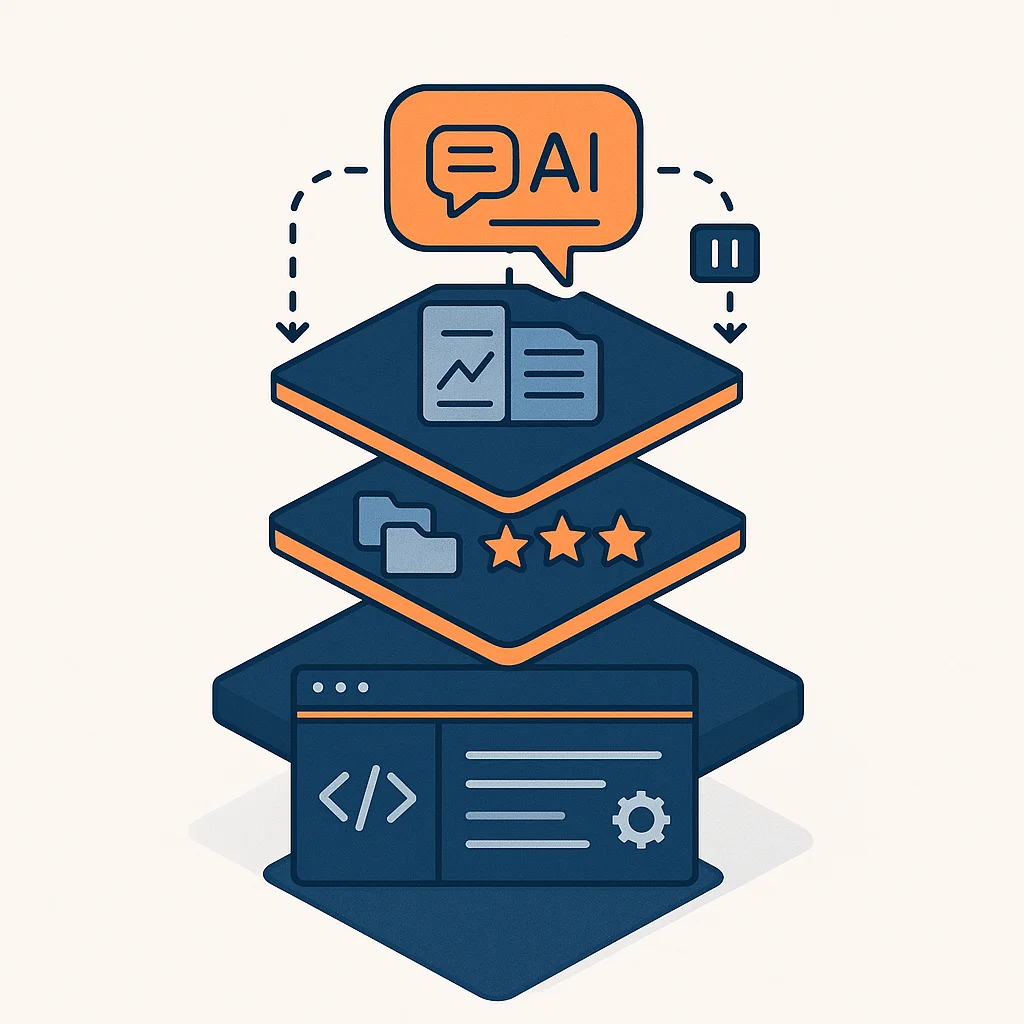
Based on the research above, here is the exact framework for getting your home services business cited by AI assistants.
Step 1: Claim and Complete Your Foursquare Listing
This is the single highest-leverage action for ChatGPT visibility. Join the Foursquare Placemakers community. Claim your business. Fill in every field:
- Precise business category ("HVAC Contractor," not "Home Services")
- Current address, phone, hours
- Photos (minimum 10 — job sites, team, trucks, completed work)
- Accurate description with specific, verifiable claims
Most contractors have never touched Foursquare. That is why this is such an asymmetric opportunity right now.
Step 2: Build Bing Search Visibility
ChatGPT's web browsing mode correlates 87% with Bing results. Submit your sitemap to Bing Webmaster Tools. Use IndexNow for instant indexing. Ensure your Bing Places listing is complete and matches your Google Business Profile exactly.
Step 3: Structure Content in 134-167 Word Semantic Units
Google AI Overviews extract self-contained passages. Structure every service page so that each section heading asks a question and the first 134-167 words below it deliver a complete answer.
Not "We offer AC repair services in Dallas." Instead: "AC repair in Dallas typically costs between $150 and $800 depending on the issue. Common repairs include capacitor replacement ($150-$300), refrigerant recharge ($200-$400), and compressor replacement ($600-$1,200). Licensed HVAC contractors in Dallas must hold a Texas ACR license. Emergency AC repair during summer months averages a 2-4 hour response time from reputable companies."
The first version is a brochure sentence. The second is a citable semantic unit.
Step 4: Add Verifiable Statistics to Every Page
The Princeton GEO study (ACM SIGKDD 2024) found that adding statistics increases AI visibility by 22% and adding quotations increases it by 37%.
Replace vague claims with specific, verifiable facts: - "Years of experience" becomes "Serving Fort Worth since 2014 with 2,847 completed installations" - "Great reviews" becomes "4.9 average across 312 Google reviews as of March 2026" - "Fast service" becomes "Average response time: 47 minutes for emergency calls"
AI engines can cross-reference these claims. Verifiable beats vague every time.
Step 5: Implement Complete Schema Markup
Structured data delivers a 73% higher selection rate in AI Overviews (Wellows, 2026). Implement at minimum:
- LocalBusiness schema — name, address, phone, hours, geo coordinates, service area
- Service schema — one per service with description and price range
- FAQ schema — 3-5 questions per service page
- Review schema — aggregate rating from Google reviews
- BreadcrumbList schema — for clear site hierarchy
Schema is the machine-readable version of your business. Without it, AI engines have to guess what you do. With it, they know exactly what to cite.
Step 6: Get Mentioned on Reddit (Authentically)
Perplexity pulls 46.7% of its citations from Reddit. You cannot fake this.
What works: - Provide genuinely helpful answers in local subreddits when people ask for contractor recommendations - Encourage satisfied customers to mention you when relevant threads appear - Participate in r/HVAC, r/Plumbing, or your trade's subreddit by sharing expertise (not self-promotion)
What does not work: Creating fake accounts to promote yourself. Reddit's community detects and destroys astroturfing. And AI engines are increasingly factoring in upvote patterns and account authenticity.
Step 7: Build Cross-Platform Presence
Businesses listed on 4+ platforms are 2.8x more likely to appear in ChatGPT responses (Digital Bloom, 2025). Your presence must be consistent across:
- Google Business Profile
- Foursquare
- Yelp
- BBB
- Bing Places
- Apple Maps
- Angi / HomeAdvisor
- Industry-specific directories (ACCA for HVAC, state licensing boards)
86% of AI citations come from brand-managed sources — websites, listings, and reviews (Yext Research, October 2025). You control the inputs. The AI controls the output. Make sure your inputs are complete everywhere.
Step 8: Update Relentlessly
AI engines favor fresh content. A site last updated 6 months ago is increasingly invisible. Content with recent citations and current statistics gets 89% higher selection probability in Google AI Overviews (Wellows, 2026).
Update cadence: - Service pages: quarterly (prices, certifications, team changes) - Statistics: every time you hit a milestone (new review count, job count, years in business) - Blog content: monthly minimum - Schema markup: whenever business details change - Photos: monthly (fresh job site photos signal an active business)
The AI Citation Scorecard: Rate Yourself
Score 0-10 on each factor. Maximum: 100.
| Factor | What It Measures | Your Score | |---|---|---| | Foursquare listing | Complete, accurate, with photos and correct category | /10 | | Bing visibility | Sitemap submitted, Bing Places complete, IndexNow active | /10 | | Content structure | Semantic units of 134-167 words, question-answer format | /10 | | Fact density | Specific statistics and verifiable claims on every page | /10 | | Schema markup | LocalBusiness, Service, FAQ, Review, Breadcrumb implemented | /10 | | Reddit presence | Genuine mentions in relevant subreddits | /10 | | Cross-platform listings | Consistent NAP on 4+ directories | /10 | | Content freshness | Updated within 30 days | /10 | | Review velocity | Steady stream of recent reviews across platforms | /10 | | Brand search volume | People searching your business name directly | /10 |
Above 70: You are positioned to be cited. Keep executing. 40-70: Significant gaps. Each missing factor compounds — fix the lowest scores first. Below 40: AI assistants are recommending your competitors. Start with Steps 1, 5, and 7 today.
What Ted Builds for AI Citation Readiness
Every Ted-built website ships with the technical foundation for AI citation:
- Complete schema markup — LocalBusiness, Service, FAQ, Review, and Breadcrumb schema on every relevant page
- Semantic content structure — headings that mirror questions, self-contained answer units, high fact density
- Core Web Vitals compliance — 90+ PageSpeed, because AI engines still favor fast, accessible sites
- Bing-optimized — sitemap submitted, IndexNow integration, proper meta tags
- Multi-modal content — text, optimized images, and structured data on every page for the 156% selection rate boost
The Grow plan at $300/month adds ongoing AI citation optimization: fresh content, review monitoring, directory management, schema updates, and quarterly citation audits across ChatGPT, Perplexity, and Google AI Overviews.
Get your free website score at sitesByTed.com — now including an AI Citation Readiness assessment.