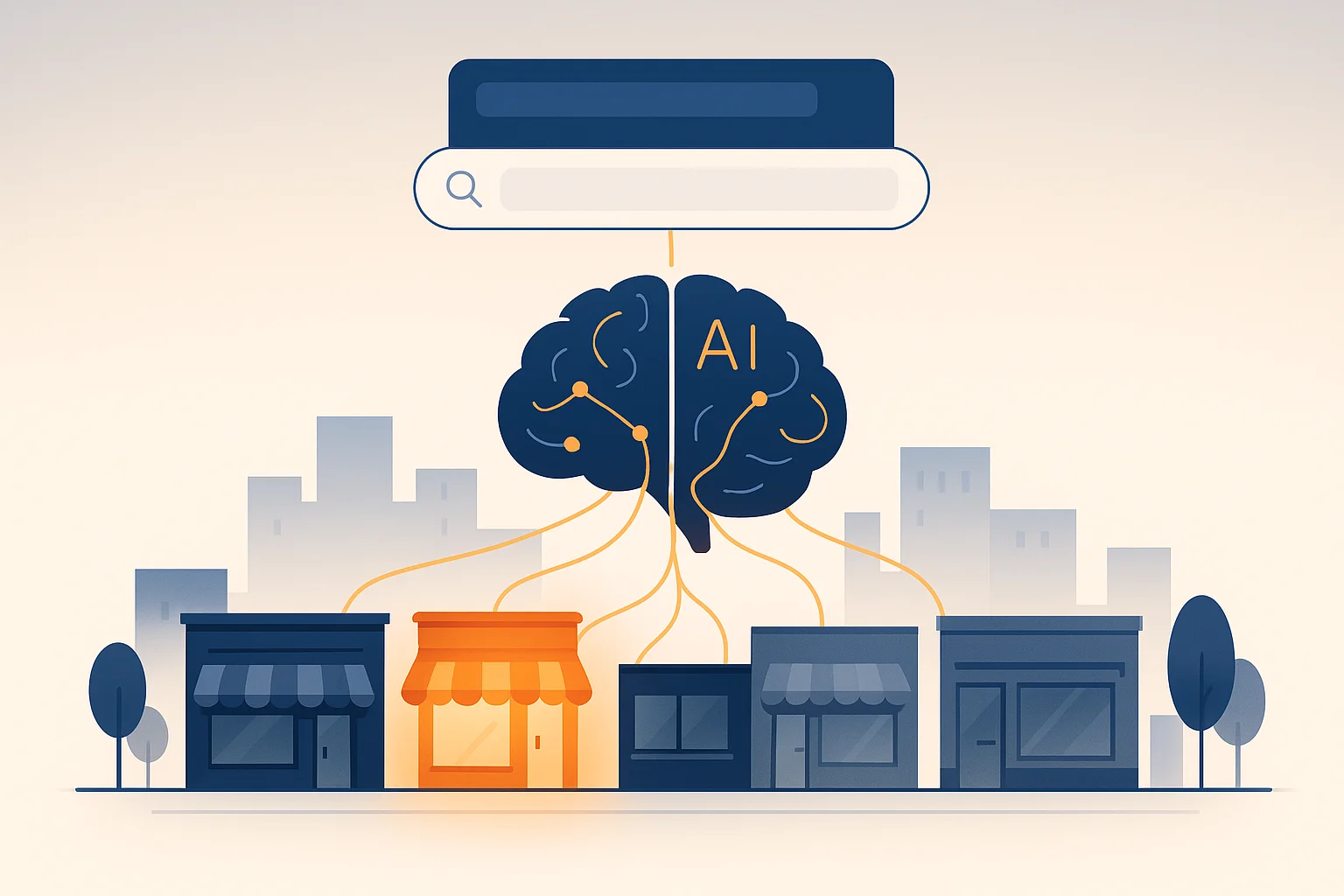
When someone asks ChatGPT "who's the best plumber in Austin?" they don't get a list of ten blue links. They get a direct answer — and your business is either named, or it's invisible.
This is Generative Engine Optimization (GEO). It's the biggest shift in digital marketing since Google introduced local search. And it's happening right now.
How Big Is This Shift?
The numbers are staggering:
- AI search holds 12-15% of global search market share (AllAboutAI, 2025) — up from near zero two years ago
- ChatGPT handles ~2 billion queries per day with 800 million weekly active users (Seer Interactive, 2025)
- 25% of Google searches trigger AI Overviews (Conductor, 2025) — for longer queries, it's 57%
- 40% of local business queries get an AI Overview (LocalFalcon/SeoProfy, 2026)
Here's the kicker: when an AI Overview appears, organic click-through rates drop 61% (Seer Interactive, 2025). But brands cited within the AI Overview see 35% higher CTR.
You're either in the AI answer or you're losing customers. There's no middle ground.
What's the Difference Between SEO and GEO?
SEO gets you ranked in a list. GEO gets you cited in an answer.
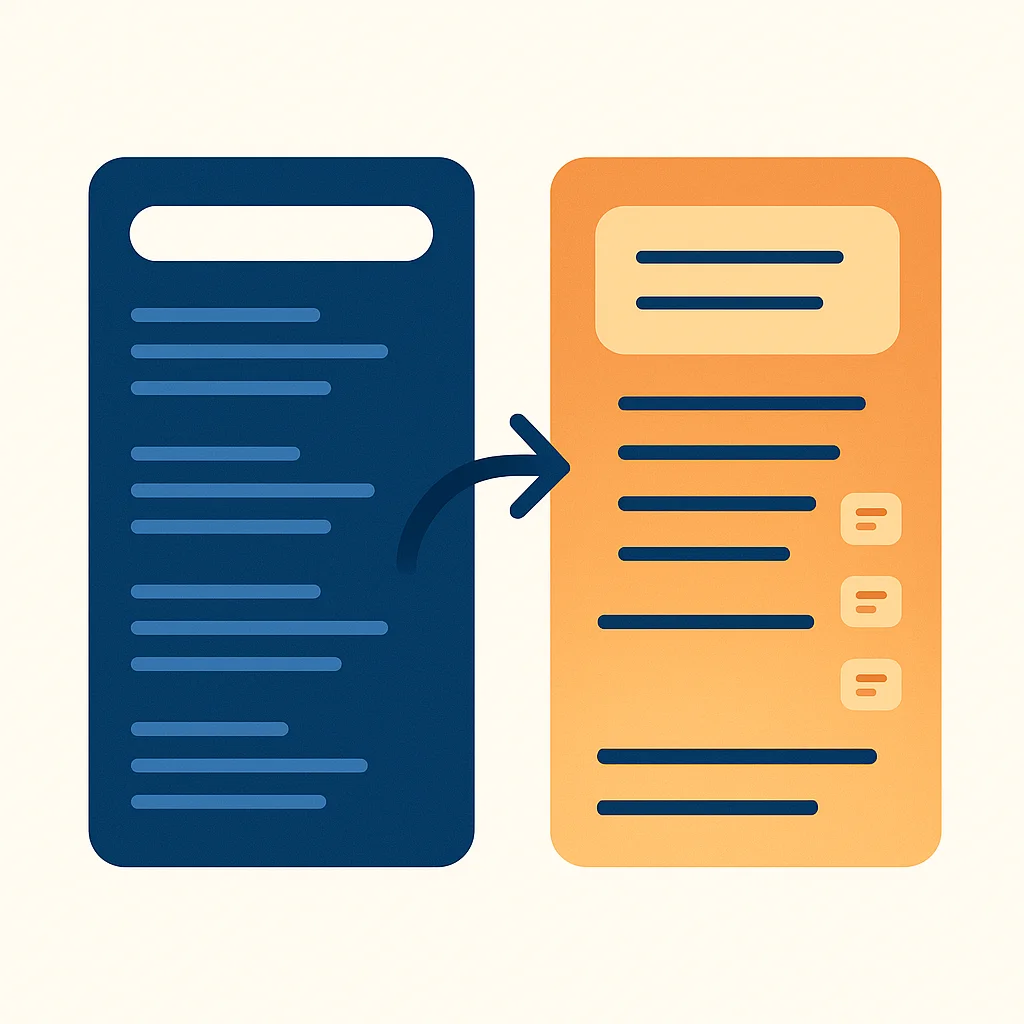
Traditional search engines evaluate signals *about* your content. Generative engines actually *read* your content, extract facts, and decide whether to cite you.
Researchers at Princeton, Georgia Tech, and others published a landmark study (ACM SIGKDD 2024) that found adding citations and statistics to your content boosts AI visibility by up to 40%. The strategies that worked best:
- Adding relevant statistics — 15-40% visibility boost
- Citing authoritative sources — significant boost across all categories
- Improving readability — 15-30% visibility boost
What didn't work? Keyword stuffing and jargon. Same stuff that stopped working for SEO years ago.
How Do AI Engines Pick Which Businesses to Recommend?
Each platform has its favorites:
- ChatGPT loves authoritative sources — Wikipedia (7.8% of citations), Forbes, G2
- Google AI Overviews pulls from Reddit, YouTube, Quora, LinkedIn
- Perplexity is community-driven — Reddit accounts for 6.6% of all citations
The common thread: AI engines strongly favor earned media over your own website (Search Engine Land, 2026). If the only place your business is mentioned is your own site, your citation probability is near zero.
How Do You Score Your GEO Readiness?
Rate yourself 0-10 on each. Above 50 total? You've got a foundation. Below 30? AI engines are ignoring you.

- 1.Content Depth — Does your site have substantive content, or just a phone number and three bullets?
- 2.Fact Density — Do you include specific, verifiable claims? ("Licensed since 2015, 847 five-star reviews, 47-minute response time")
- 3.Schema Markup — LocalBusiness, Service, FAQ, and Review schema implemented?
- 4.Entity Authority — Consistent presence across Google Business Profile, Yelp, BBB, industry directories?
- 5.Third-Party Citations — Is your business mentioned on other websites?
- 6.Content Freshness — Updated within the last 30 days?
- 7.Answer-Ready Format — Direct answers in the first 40-60 words of each section? FAQ format?
What Should You Actually Do? (7 Steps)
Step 1: Audit your content. Open every page and ask: "What specific facts could an AI extract from this?" If the answer is "not much," rewrite it.
Step 2: Add statistics and specific claims. Replace "years of experience" with "serving Dallas-Fort Worth since 2012 with over 3,400 completed projects."
Step 3: Add schema markup. LocalBusiness, Service, FAQ, Review, and BreadcrumbList schema on every relevant page.
Step 4: Structure for direct answers. Use headings that mirror common questions. Put the answer in the first 40-60 words below each heading.
Step 5: Build third-party mentions. Maintain profiles on Google Business Profile, Yelp, and BBB. Encourage detailed reviews. Participate in relevant Reddit communities.
Step 6: Create content AI can't generate. Original data, local market insights, before-and-after case studies with specific metrics. AI can write generic content all day — it can't fabricate your real results.
Step 7: Update relentlessly. Service pages quarterly. Statistics annually. New content monthly. A site last updated 18 months ago is nearly invisible to AI engines.
How Does This Connect to Regular SEO?
GEO doesn't replace SEO — it builds on it. Seer Interactive found that 92% of AI Overview citations come from domains already ranking in the top 10. You still need strong SEO fundamentals to be in the pool. GEO determines whether you're selected from that pool.
SEO gets you into the room. GEO gets you named.
What Ted Builds for GEO
Every Ted-built website includes GEO fundamentals from day one:
- Complete LocalBusiness, Service, and FAQ schema markup
- Content structured for AI extraction with direct answers and high fact density
- Core Web Vitals compliance (90+ PageSpeed)
- Clean HTML that AI engines can parse without ambiguity
- Mobile-first design for consistent content delivery
The Grow plan at $300/month adds ongoing GEO optimization: fresh content, citation monitoring, schema updates, and entity authority building.
Get your free website score at sitesByTed.com to see where you stand — for both traditional search and AI-powered search.